
The ‘Energy Democracy and the Politics of Energy Transition in African Countries’ project recently concluded its second and final workshop, held in London from 25-26 March 2025. This two-day event brought together a group of stakeholders to address critical issues surrounding good governance and corruption within the energy sectors of lower- and middle-income nations.
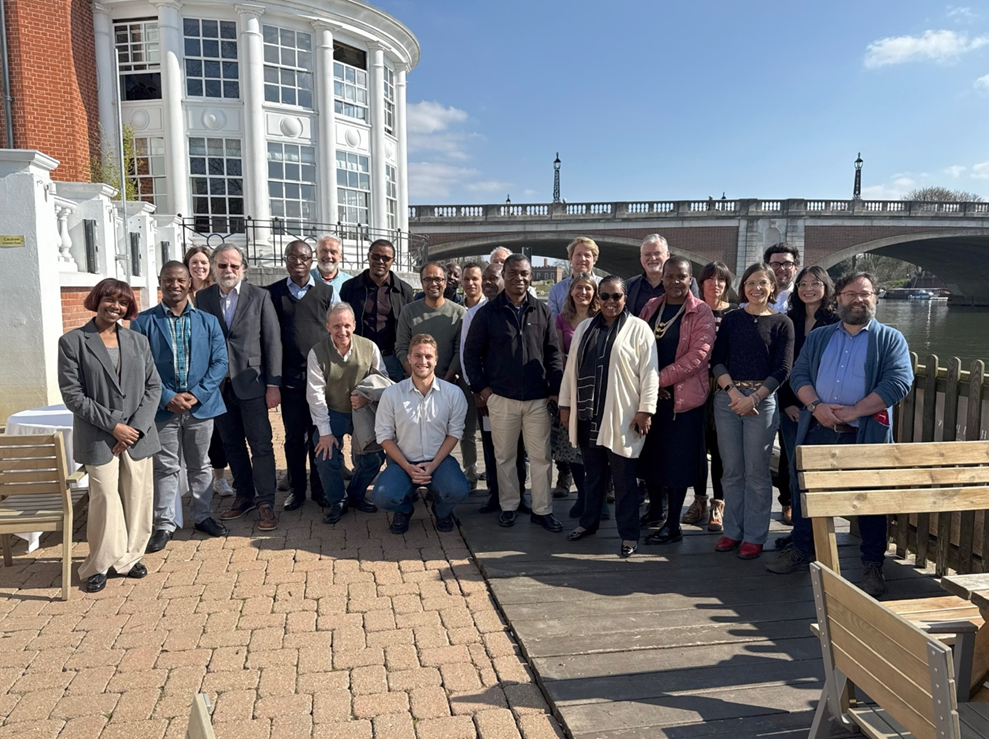
Fig 1: Participants to the workshop Democratisation of Energy Governance, March 2025.
The workshop aimed to identify pathways for enhancing the participation of local communities and civil society, thereby fostering a more socially just energy transition. Participants explored best practices in transparency and fairness, considering their potential for replication to facilitate a shift from centralized, opaque energy systems towards more decentralized and open models.
The first day focused on presentations and collaborative discussions centered on case studies of small-scale, decentralized mini-grid projects. This included presentations sharing valuable lessons learned from the SIGMA and CESET projects, insights into the support and experiences of energy communities in Bangladesh and the EU, an examination of transformative energy regimes in South Africa, and a discussion on fostering inclusive and effective participation in decentralized rural electrification initiatives.
The second day shifted its attention to presentations and group discussions concerning utility-scale projects. Topics covered included large energy infrastructure governance, the challenges of corruption in energy markets, the role of data in empowering communities, overarching energy governance issues in South Africa, and strategies for engaging civil society in energy infrastructure decisions and influencing energy policies.
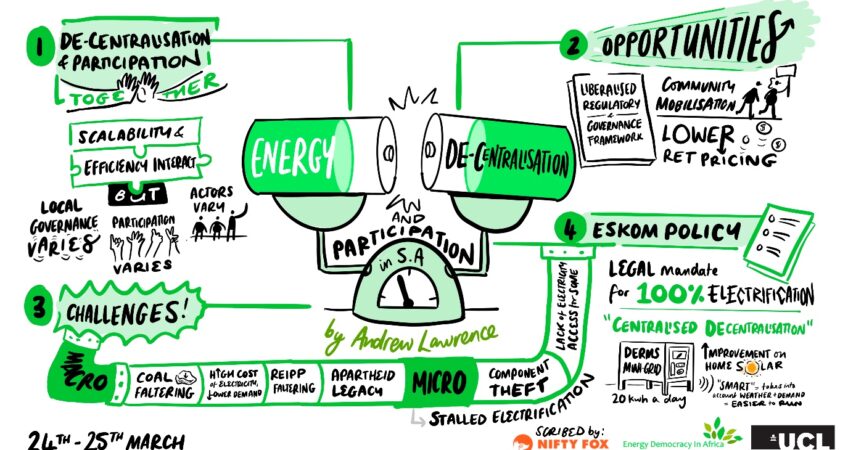
The highly interactive workshop, characterized by dynamic discussions, yielded significant insights into how energy democratization can be strengthened to enable greater local participation and inclusion within the energy sector. These key learnings were meticulously captured by Laura Evans-Hill, a skilled visual communicator specializing in enhancing the impact of research dissemination.

Fig 2: Example of visual summary at the workshop Source: Nifty Fox, 2025.
The workshop underscored several critical elements for successful energy decentralization:
-
Contextual Understanding: A thorough understanding and integration of the specific nuances of the local context in which energy projects are developed and implemented is essential for informed decision-making and effective processes.
-
Meaningful Community Engagement: Continuous and meaningful engagement with local community members and project-affected individuals is paramount. This engagement must be inclusive, addressing considerations of gender, class, and age, and fostering two-way accountability.
-
Scalable and Replicable Models: The development of scalable and replicable models that identify appropriate business structures and achieve a balance between profitability and community support is crucial.
-
Capacity Building Initiatives: Incorporating capacity-building programs that prepare for the future of the energy transition and cultivate a sense of responsibility and commitment among local communities and citizens in energy infrastructure projects is vital.
-
Robust Governance Frameworks: Embedding rigorous commitments to sound regulatory frameworks, robust environmental and social management plans, and effective independent monitoring safeguards is necessary.
On governance, the workshop emphasized the importance of considering and addressing key factors to advance transparency and accountability in large-scale infrastructure projects. These include understanding the prevailing economic context, analyzing how the existing political regime enables or hinders energy democracy, assessing how community-owned models compete with other market actors, navigating funding complexities, and acknowledging the existing space (or lack thereof) for freedom of speech. The participants concluded that a multi-sectoral approach, fostering collaboration between policy makers, data infrastructure developers, practitioners, and civil society, is critical for progress in this area.